
Networking is changing fast — and in 2025, success isn’t only about skills, experience, or qualifications. It’s about how people feel when they interact with you. This modern approach reflects the philosophy once pioneered by Emily Post: good manners are not rigid behaviors — they are a form of respect.
Today, we call it modern networking etiquette.
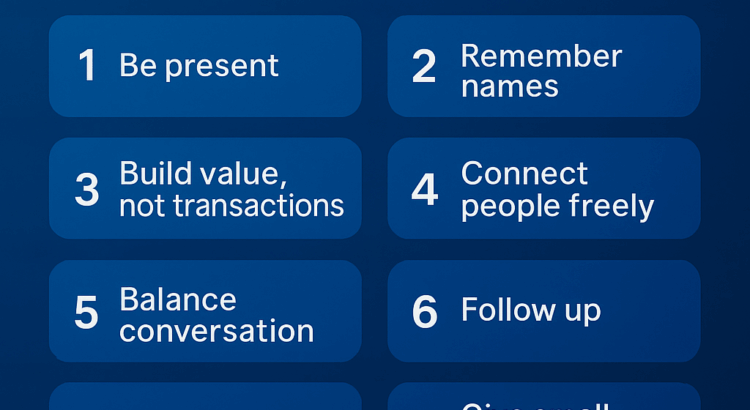
Whether you’re building a career, seeking promotions, growing a business, or expanding your professional circle, the following nine rules of networking create trust, credibility, and opportunity.
1. Presence First, Phone Second
In a distracted world, attention is the new courtesy.
When you’re speaking with someone:
- Avoid glancing at your phone
- Maintain eye contact
- Use open and welcoming body language
This small behavior communicates respect and signals that the conversation matters.
In networking, presence builds connection.
2. Remember Names — Because Names Matter
Nothing personalizes a conversation more than someone using your name.
Professionals who remember names:
- Build rapport faster
- Create a sense of familiarity
- Establish trust early
If you forget a name, ask again politely. It’s far more professional to clarify than avoid.
3. Networking as Exchange, Not Extraction
The worst approach to networking is:
“What can you do for me?”
The modern approach is:
“How can we be useful to each other?”
This shift transforms networking from transactional to relational.
Value can come through insights, introductions, encouragement, or opportunities.
People champion those who add value, not those who take it.
4. Introduce Others Generously
Strong networkers don’t hoard contacts — they connect contacts.
When you introduce two people who can help each other, everyone benefits:
- They gain opportunity
- You gain credibility
- The network grows
Your professional reputation rises when people associate you with value creation.
5. Grace in Conversation — Don’t Dominate, Don’t Disappear
Conversations fail at two extremes:
- One person dominates and talks endlessly
- One person contributes nothing and fades out
Effective networking has rhythm:
Ask → Listen → Share → Ask again
Instead of trying to be interesting — be interested.
People always remember how you made them feel.
6. Follow Up — Briefly, Warmly, Promptly
Following up within 24–48 hours shows reliability and professionalism.
A perfect follow-up email or message includes:
- A brief thank-you
- A specific reference to the conversation (“I loved your point about ___”)
- A clear next step (if applicable)
Follow-up builds momentum. Without it, connections fade.
7. Keep Promises Small — and Keep Them All
The fastest way to lose trust in networking is to overpromise.
Rather than promising everything, promise one small, guaranteed action, such as:
- Sending a resource
- Sharing a link
- Making a simple introduction
Reliability compounds. Your reputation becomes your brand.
8. Reciprocity Without Scorekeeping
Reciprocity is not transactional.
You don’t build long-term professional relationships by keeping score.
When you give without expectation, people naturally want to support you later.
Trust builds — not debt.
9. End Conversations Gracefully
Leaving a conversation well is just as important as starting one.
A polished and confident ending might sound like:
“I really enjoyed speaking with you — I’m going to circulate a bit more, but I’d love to stay connected.”
Grace communicates professionalism.
Where Modern Networking Etiquette Pays Off
These rules create measurable advantages in:
- Job searches
- Internal promotions
- Business development
- Client relationships
- Partnership opportunities
- Leadership visibility
In a competitive marketplace, connection is currency.
Digital Networking Etiquette (2025 Update)
The rules apply both in person and online.
Digital networking success comes from:
- Personalizing messages instead of copying templates
- Respecting people’s time
- Avoiding cold sales pitches without value
- Responding within a reasonable timeframe
- Sharing resources before asking for anything
For further study on digital etiquette and relationship-driven business networking:
- Harvard Business Review – Social Capital: https://hbr.org
- LinkedIn Learning — Business Networking: https://www.linkedin.com/
learning
The #1 Mistake People Still Make
Many professionals only network when they need something.
Successful people network before they need opportunity.
They stay connected, follow up periodically, and add value consistently.
Opportunities come to those who maintain relationships — not those who scramble to build them.
Final Thoughts — Connection Is a Professional Advantage
Emily Post’s philosophy remains true today:
People never forget how you make them feel.
The professionals who thrive in 2025 are not the loudest — they’re the ones who:
- Pay attention
- Show courtesy
- Stay reliable
- Give generously
- Build long-term trust
Modern networking etiquette is not “nice to have.”
It is a career strategy.
 Want to improve your networking skills and build a powerful professional circle?
Follow us for weekly career development articles, downloadable networking guides, and real-world relationship-building strategies.
